
How an Early Curriculum Prepares Kids for Kindergarten
The early years of a child’s life are vital for their growth and development. Experiences during this time lay the foundation for success in school and beyond. For parents eagerly anticipating their little one’s journey into kindergarten, ensuring they receive an early curriculum that’s nurturing and enriching can make all the difference. But what exactly does an early curriculum entail? And how does it prepare children for the transition to kindergarten? Let’s unpack everything you need to know.
What Is an Early Curriculum?
An early curriculum refers to a structured yet flexible approach to learning during the preschool years, generally for children aged 3 to 5. While it may include basics like letter recognition or counting, its scope is much broader than academics. The curriculum is designed to foster social-emotional development, cognitive growth, communication skills, and physical coordination—all while nurturing a love for learning.
Unlike the traditional perception of rigorous, desk-based instruction, an effective early curriculum is play-based and tailored to meet a child’s developmental milestones. It encourages curiosity and hands-on exploration, providing children with experiences they relate to naturally and enthusiastically.
Key Components of an Early Curriculum
To understand how an early curriculum benefits children, it’s essential to look at its core components. Each one serves a distinct role in shaping well-rounded individuals ready to thrive in kindergarten:
1. Language and Communication Development
Effective language development is at the heart of an early curriculum. These programs expose children to rich vocabulary, teach listening skills, and encourage self-expression. Circle time, story readings, and conversations with peers all help children express opinions, ask questions, and build confidence in verbal communication—skills that are imperative for success in kindergarten.
2. Social and Emotional Growth
One of the primary aims of an early curriculum is helping children navigate interpersonal relationships and regulate emotions. Children learn to take turns, cooperate with peers, and practice problem-solving in group settings. Structured activities like role-playing or collaborative games teach empathy and perspective-taking while fostering self-confidence.
3. Cognitive and Problem-Solving Skills
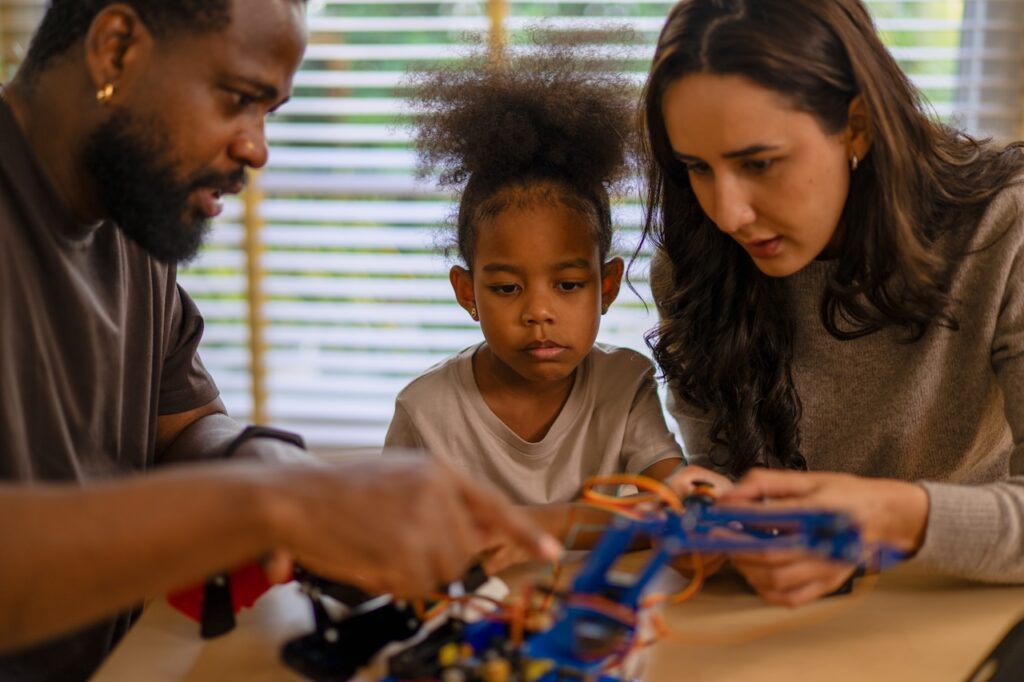
An early focus on cognitive development involves giving children opportunities to think critically, solve problems, and make connections. Whether through puzzles, building blocks, or simple science experiments, kids learn how to conceptualize ideas and handle challenges. This not only prepares them for academic activities in kindergarten but also instills resilience.
4. Fine and Gross Motor Development
An early curriculum also focuses on physical development. Activities like drawing, cutting with scissors, and assembling small blocks improve fine motor coordination, while running, climbing, or balancing exercises enhance gross motor skills. Physical preparedness ensures that kids can excel in kindergarten tasks such as writing, participating in sports, and managing self-help activities like tying shoelaces.
5. Exposure to Early Literacy and Numeracy
Playful introductions to letters, sounds, numbers, and basic math concepts provide children with pre-literacy and pre-math skills. Singing alphabet songs, counting during snack times, or recognizing shapes ignites familiarity and eases the transition into more structured kindergarten subjects.
Why an Early Curriculum Eases the Transition to Kindergarten
Starting kindergarten brings significant changes for young children—new rules, environments, and routines. These transitions can be overwhelming without preparation. A high-quality early curriculum mitigates this by equipping kids with tools to adapt seamlessly:
- Routine Familiarity: Preschool programs incorporate schedules similar to kindergarten, such as circle time, snack breaks, and group activities. This familiarity with structure makes new daily routines feel intuitive.
- Confidence in Learning: Children exposed to age-friendly challenges through early curricula feel more confident tackling academic and social experiences in kindergarten settings.
- Independence: From taking care of personal belongings to following classroom instructions, early curricula nurture self-reliance, which is vital once kids enter kindergarten.
- Positive Attitude Toward School: By associating learning with fun, early curricula help children begin their academic journey on a positive note, fostering a lifelong love of education.
Conclusion
The value of an early curriculum extends far beyond academic readiness; it cultivates well-rounded individuals who are emotionally, socially, and cognitively prepared for kindergarten. By introducing children to the joy of learning, instilling independence, and providing tools for emotional growth, these programs lay the foundation for long-term success.
As you navigate this crucial decision for your little one, consider not just the curriculum but also the environment, educators, and approach that will make your child feel safe, inspired, and curious. The right start can make all the difference in their education journey.