
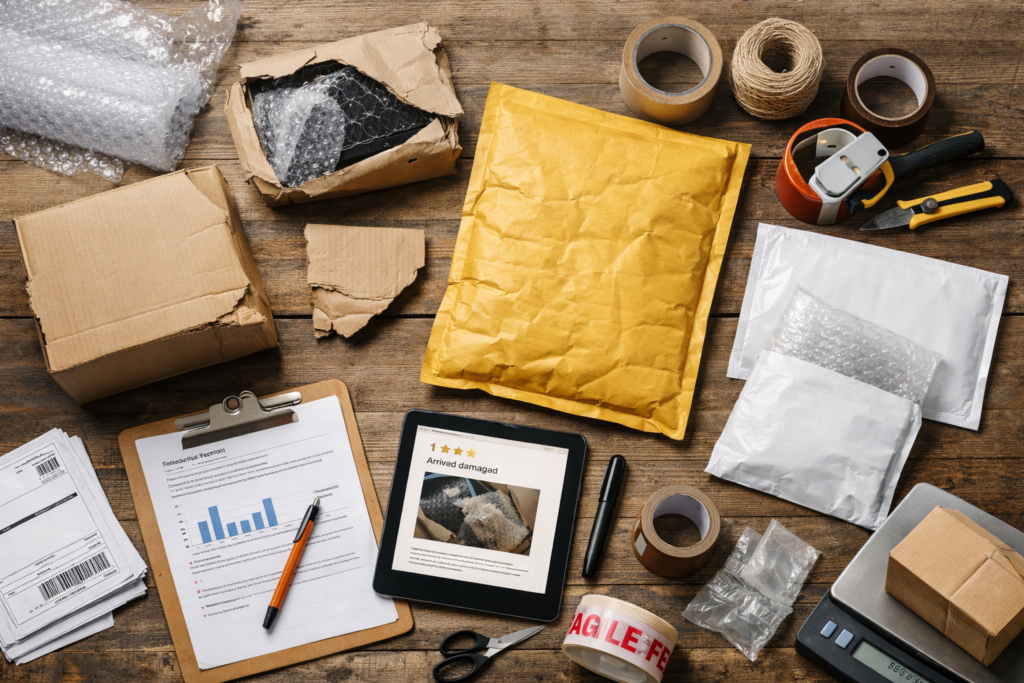
Why Shipping Mailers Matter More When Customer Reviews Mention Damaged Deliveries
Key Takeaways
- Match shipping mailers to the product first, not the postage chart. Poly mailers work for apparel and soft goods, while bubble mailers are the safer call for small items that can chip, bend, or crack in transit.
- Calculate the full cost of a mailer against damage, returns, and claims—not just label price. A cheaper package stops being cheap the moment a crushed corner turns into a refund and a bad review.
- Check USPS size, class, and label rules before changing shipping mailers across Amazon, Etsy, eBay, or Shopify orders. Address placement, barcode scans, and closure strength can affect tracking, delivery speed, and support volume fast.
- Right-size shipping mailers based on your actual order mix. Oversized mailers lead to item movement, weak seals, ugly package presentation, and more missing or damaged-delivery complaints.
- Compare wholesale mailers by film thickness, seal strength, usable interior space, and consistency—not just pack price. Sellers shipping 50 to 1000 orders a month need supplies that hold up week after week, especially around holidays and promo spikes.
- Use custom mailers only where they protect margin or repeat purchase behavior. Plain stock mailers often make more sense for low-AOV orders, while branded mailers can help on giftable, repeat-buy, or review-sensitive shipments.
One damaged-delivery review can wipe out the profit from 20 clean orders. That’s not dramatic — it’s the math sellers run into every week when returns, replacement stock, extra postage, and marketplace dings start stacking up. For stores shipping 50 to 1,000 orders a month, shipping mailers aren’t a throwaway supply line item; they’re part of margin control, account health, and buyer trust.
Too often, sellers blame USPS, rough handling, or holiday volume when a package arrives crushed or torn. But here’s what most people miss: the wrong mailer creates the failure before the carrier ever scans the label. A thin poly bag on a sharp-edged product, a bubble mailer that’s too loose, an address label that wrinkles — won’t scan cleanly — small choices, expensive outcome. And once reviews start mentioning damaged deliveries, buyers don’t read that as a carrier issue. They read it as a seller issue. Fast.
Damaged-delivery reviews are a margin problem, not just a customer service problem
Damage complaints hit profit before they hit pride.
- One bad delivery multiplies cost fast. A crushed package can mean refunding postage, replacing inventory, paying for return mail, and eating marketplace claims. On Amazon or eBay, one dented corner noted in feedback can drag seller ratings harder than a small price change ever will.
- Reviews spread operational failure in public. Buyers don’t separate carrier handling from packaging choices. If the label, address, and tracking show on-time delivery but the item arrives split, they blame the seller’s shipping mailers. That’s why switching from thin poly to padded bubble options—or using mailer boxes for shipping when edges can crush—usually cuts damage complaints first.
- Carrier blame misses the controllable fix. USPS, Priority, First Class, and certified services all process millions of packages through drops, belts, and hold locations. In practice, the mailer has to survive that system. Smart sellers test ecommerce mailers with a 3-foot drop, check seam failure, and review whether custom shipping mailers or plain envelopes are right for the SKU.
How one crushed package can trigger refunds, claims, and lower seller ratings
A $14 order can turn into a $32 problem in 48 hours. Refund, replacement, postage, lost stamps or supplies, and a missing-package notification all stack up.
Why marketplace feedback on shipping damage changes buyer trust faster than price changes
Shoppers tolerate a $1 increase. They won’t tolerate repeat reviews about torn mailers, bent boxes, or wet package delivery during holidays.
What most sellers miss when they blame the carrier instead of the mailer
Subscription box mailers and poly bags work for soft goods, not every SKU. One packaging adviser from Ucanpack has noted that right-sizing, stronger seals, and matching the mailer to the item usually reduce damage faster than changing carriers.
Let that sink in for a moment.
Choosing the right shipping mailers starts with the product, not the postage rate
Over coffee, the smart advice is simple: pick shipping mailers for what the item needs in transit, not what looks cheapest at the USPS counter. A lower postage label means nothing if damaged delivery leads to claims, missing package messages, or a bad review that sticks. For sellers managing daily mail, that tradeoff shows up fast.
When poly mailers make sense for apparel, soft goods, and non-fragile orders
ecommerce mailers work best for T-shirts, leggings, linens, and other flexible items that can handle compression without losing shape. Poly mailers cut weight, hold up against moisture, and usually beat boxes on first class or priority shipping for soft goods. They also fit cleanly with a printed address label, tracking barcode, and custom branding.
Good rule: if the item can bend, fold, or compress safely, poly is usually fine.
When bubble mailers beat flat envelopes for small items that still need impact protection
Bubble mailers are the middle ground—better than plain envelopes, cheaper than boxes. They make sense for jewelry, small tools, cosmetics, phone accessories, and anything light that still needs bubble protection against drops or rough sorting.
Think about what that means for your situation.
When boxes still win even if a mailer looks cheaper at first
Hard goods, gift sets, candles, mugs, — stacked multi-item orders should move to boxes. This is where mailer boxes for shipping and subscription box mailers earn their keep, because crushed corners and weak seals cost more than postage ever will.
How to match size, thickness, and closure strength to your average order profile
Three checks matter: size, mil thickness, and seal strength. Custom shipping mailers should match the average package profile—not the biggest order from holidays. Oversized mailers need extra void fill; undersized ones stress the seal and raise returns.
Is it cheaper to ship a box or a mailer? The real cost answer sellers need right now
Here’s the surprise: for a 6-ounce apparel order, switching from a corrugated box to shipping mailers can cut postage by 20% to 35%—and sellers still lose money if the package shape causes damage or a return. The cheaper option isn’t the one with the lowest first label cost. It’s the one that protects margin after delivery.
Dimensional weight, USPS class options, and why ounces still decide profit
For most soft goods, ounces still matter more than inches. USPS Ground Advantage and Priority rates both react fast to weight, and even a 2-ounce change can wipe out profit on a $14 order. That’s why smart sellers keep poly, bubble, and paper options on the packing table instead of forcing every package into one format.
Best fit for mailers:
- Tees, leggings, linens, and non-fragile goods
- Flat items that don’t need rigid corners
- Orders where tracking, label scan quality, and low postage matter most
How postage, label format, and package shape affect online shipping costs
Postage isn’t just weight. A wrinkled mailer, bad address placement, or oversized envelope can trigger surcharges—or failed scans. In practice, sellers using ecommerce mailers should test 4×6 label placement, seal strength, and drop handling before buying wholesale. For bundled kits, mailer boxes for shipping often beat soft envelopes on claims.
And for recurring shipments, subscription box mailers usually cost more upfront but reduce crushed edges and ugly customer photos.
Real results depend on getting this right.
The hidden cost of oversized mailers: returns, missing items, and damaged corners
Oversized shipping mailers create movement. Movement causes corner damage, torn seams, missing items, and more customer notification issues. Sellers using custom shipping mailers should size them close, hold void space under an inch, and reserve bubble mailers for products that need surface protection—not structural support.
Shipping mailers affect compliance, tracking, and delivery performance more than sellers think
Is switching packaging really enough to cut damage complaints? Usually not. For sellers shipping 50 to 1,000 orders a month, shipping mailers change postage, scans, claims, and even whether a package gets sorted cleanly through USPS.
USPS, Priority Mail, and First Class rules sellers should check before changing packaging
Rule check first. A poly mailer, bubble mailer, or rigid envelope can move a shipment into a different mail class, and that affects postage, stamps, services, and delivery expectations. Sellers using ecommerce mailers for apparel or soft goods should confirm weight, thickness, and flexibility before swapping out boxes.
For branded shipments, custom shipping mailers can work well—but only if the package still meets USPS machinable standards and the chosen label format stays readable.
Why address placement, label adhesion, and barcode scannability cause delivery delays
Small errors. Big mess. If the address sits over a seam, the label curls, or glossy film reflects scanner light, tracking can miss the first acceptance scan—or the last one before delivery notification.
- Keep the shipping label on the flattest face
- Leave barcode space free of tape and wrinkles
- Use waterproof stock for poly and bubble mailers
How tracking gaps, certified mail exceptions, and intercept requests create avoidable support tickets
Tracking gaps trigger “missing package” messages fast, especially around holidays. Mailer boxes for shipping often hold labels better than soft envelopes for heavy items, while subscription box mailers and poly mailers need tighter process control at packout. In practice, fewer scan failures mean fewer intercept requests, fewer certified mail exceptions, and fewer “where is my package” tickets.
Buying shipping mailers the smart way: wholesale, custom options, and supply planning for growing stores
Bad packaging gets expensive fast.
One spike in damaged-delivery reviews can wreck margin, stall repeat orders, and force a messy change in packing supplies. The fix isn’t buying the cheapest shipping mailers online—it’s buying the right ones with a plan.
What to compare in wholesale mailers besides unit price
Smart buyers compare four things before ordering wholesale:
- Material and thickness: 2.5 mil poly mailers work for apparel; fragile items usually need bubble mailers or mailer boxes for shipping.
- Seal strength: weak adhesive leads to split seams, missing package claims, and ugly delivery photos.
- Usable size: a 10×13 mailer doesn’t fit every folded hoodie once the packing slip and return label go in.
- Carrier fit: check USPS size rules, postage, tracking, and priority or first class options before buying 500 units.
When custom mailers help and when plain stock mailers are the better call
Custom shipping mailers make sense when a store ships the same SKU mix every week and wants cleaner brand recognition at delivery. For brands using ecommerce mailers for apparel, inserts, or repeat-purchase products, custom print can lift recall without adding box cost.
But plain stock mailers work better for testing new bundles, handling returns, or packing mixed orders—especially if the seller also uses subscription box mailers and standard envelopes across channels.
How to stock shipping supplies around holidays, demand spikes, and forwarding or return volume
Three rules.
Think about what that means for your situation.
- Carry 3 to 4 weeks of core mailers, tape, and spare address labels before holidays.
- Add 15% extra for returns, forwarding, and exchange season.
- Keep one backup size on the shelf—when order mix shifts, that buffer stops expensive last-minute store runs for boxes and supplies.
In practice, that approach cuts rushed buys, protects delivery times, and keeps shipping mailers from becoming the reason reviews turn sour.
Frequently Asked Questions
Does the USPS have free mailers?
Yes, but only for specific USPS services. USPS offers free Priority Mail and Priority Mail Express envelopes, boxes, and some padded mailers through its online store and retail locations, and they must be used with that matching postage service. They are not free general-purpose shipping mailers for First-Class or Ground Advantage shipments.
Where can I get free shipping mailers?
If you’re looking for truly free shipping mailers, USPS is the main option—and again, that’s tied to Priority Mail products. Beyond that, sellers sometimes get free branded mailers from supplier sample programs or repurpose clean inbound packaging, but for day-to-day fulfillment, buying wholesale mailers is usually the cheaper move per order.
Is it cheaper to ship a box or a mailer?
For soft goods like apparel, a poly mailer is usually cheaper than a box because it weighs less — takes up less space. That matters with USPS and other carriers where postage is driven by weight, dimensions, and zone. But if the item can bend, crush, or crack, the cheaper option upfront can turn expensive fast through damage claims and returns.
Does the USPS have poly mailers for shipping?
Not in the plain wholesale sense most ecommerce sellers mean. USPS provides certain branded envelopes and padded mailers for Priority Mail services, but it doesn’t function like a packaging supplier offering blank custom poly mailers in bulk for everyday marketplace orders. If you ship on Amazon, Etsy, eBay, or Shopify, you’ll usually buy your own poly mailers and print your own shipping label.
What size shipping mailers should a small business keep in stock?
For most stores shipping 50 to 1,000 orders a month, three sizes cover a big chunk of volume: 6×9 for small accessories, 10×13 for tees and light apparel, and 14.5×19 for bulkier clothing or multi-item orders. That’s the practical sweet spot. Too many sizes create inventory headaches, while too few force oversized packages and wasted postage.
Are bubble mailers better than poly mailers?
Depends on what you’re mailing. Bubble mailers work better for items that need light impact protection—jewelry, books, cosmetics, small electronics—while poly mailers are the right fit for durable soft goods like shirts, leggings, and fabric accessories. Here’s what most sellers miss: bubble mailers cost more, so don’t use them just because they feel safer.
No shortcuts here — this step actually counts.
Can shipping mailers be used for Amazon, Etsy, eBay, and Shopify orders?
Yes, as long as the mailer fits the product, protects it well, and meets carrier and marketplace rules. Sellers should make sure the address label stays flat and readable, the seal holds in transit, and the package doesn’t exceed service limits for weight or thickness. For Amazon in particular, damage rates matter—a weak mailer can hurt account health faster than people think.
Should sellers use custom shipping mailers or plain ones?
Plain mailers are fine if margins are tight and repeat purchase isn’t a big driver. But custom shipping mailers can make sense for brands with strong direct traffic, giftable products, or high social sharing—especially on Etsy and Shopify—because packaging affects perceived value more than most sellers admit. Just don’t pay for custom printing before you’ve fixed your sizing and damage issues.
How thick should poly mailers be for shipping?
For everyday apparel and soft goods, 2.5 mil poly mailers are a solid baseline. Go up to 3.0 or 3.5 mil if orders are heavier, edges are sharper, or your package gets rough handling during delivery. Thin mailers save pennies and lose dollars. Fast.
Do shipping mailers need extra tape or labels?
Usually, a good self-seal mailer doesn’t need extra tape. What it does need is a clear shipping label, a clean address area, and strong adhesion that won’t peel during sorting, weather exposure, or holiday volume spikes. If packages are opening in transit, the fix usually isn’t more tape—it’s buying better mailers.
Customer reviews about damaged deliveries usually look like a service issue on the surface. They aren’t. They’re an operations problem that cuts into margin, weakens seller metrics, and chips away at buyer trust one order at a time. That’s why packaging decisions can’t be made by postage rate alone. A cheap mailer that fails at the seam, bends a corner, or lets an item slide around is expensive the moment it triggers a refund, a replacement, or a one-star review.
The smarter move is simpler than most sellers make it. Match the package to the product first, then check how that choice affects postage class, scan reliability, label placement, and return volume. Shipping mailers do their job only when they protect the item, move cleanly through carrier systems, and fit the store’s order mix without adding waste or support tickets. And during peak season—when delays and rough handling spike—that margin for error gets even thinner.
The next step is practical: pull the last 30 damaged-delivery reviews, group them by product type and packaging used, and replace one weak packaging setup this week. Test it for 50 shipments, track claims and complaints, and keep only what holds up.
For more great reading, visit our site and explore related topics.