
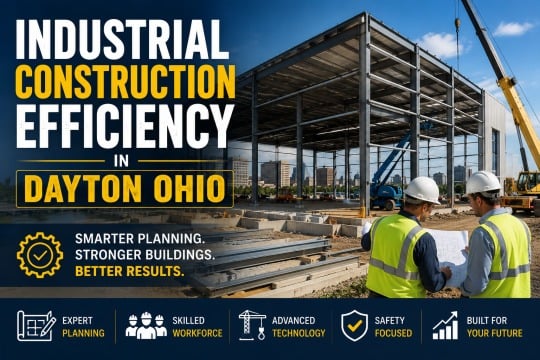
Industrial Construction Efficiency in Dayton Ohio
Industrial construction projects require careful planning, skilled execution, and efficient management to achieve successful results. Whether constructing manufacturing facilities, warehouses, distribution centers, or processing plants, every phase of the project affects costs, schedules, and long term performance. Businesses throughout Dayton, Ohio, understand that improving construction efficiency helps reduce expenses, minimize delays, and create facilities that support future growth.
This guide explains the key factors that contribute to industrial construction efficiency and why working with experienced professionals can make a significant difference in project outcomes.
Comprehensive Project Planning
Every efficient industrial construction project begins with a detailed plan. Before breaking ground, contractors evaluate project goals, site conditions, timelines, budgets, and potential challenges. Thorough planning helps prevent unexpected issues that could disrupt construction later.
A well developed project plan typically includes:
Detailed construction schedules
Budget forecasting
Site assessments
Material procurement strategies
Risk management plans
Planning each phase carefully creates a solid foundation for a successful project while helping owners maintain greater control over costs and timelines.
Effective Project Management
Project management plays a central role in construction efficiency. Coordinating subcontractors, suppliers, engineers, architects, and owners requires constant communication and organization.
Experienced project managers focus on:
Monitoring project schedules
Coordinating subcontractors
Managing budgets
Solving issues quickly
Maintaining quality standards
Strong leadership helps projects stay on track while reducing unnecessary downtime and avoiding costly mistakes.
Modern Construction Technology
Technology has transformed industrial construction by increasing accuracy and improving collaboration between project teams. Digital tools help contractors identify potential issues before they become expensive problems.
Many industrial projects now utilize:
Building Information Modeling
Drone site inspections
Cloud based project management software
Digital scheduling platforms
Laser measurement equipment
These technologies improve planning, communication, and decision making throughout the construction process while helping teams work more efficiently.
Skilled Labor Improves Productivity
Construction efficiency depends heavily on experienced professionals who understand their trade. Skilled workers complete tasks accurately, safely, and according to project specifications.
Leading contractors invest in:
Ongoing employee training
Safety education
Equipment certifications
Leadership development
Technical skill improvement
A knowledgeable workforce reduces rework, improves craftsmanship, and contributes to better overall project performance.
Material Management and Supply Chain Coordination
Construction projects rely on having materials delivered at the right time and in the correct quantities. Delayed shipments or material shortages can quickly affect productivity.
Efficient contractors work closely with suppliers to:
Order materials early
Monitor inventory levels
Coordinate deliveries
Reduce storage challenges
Avoid project interruptions
Proper supply chain management keeps construction moving while minimizing unnecessary delays.
Safety Supports Greater Efficiency
A safe job site is also a productive job site. Workplace injuries can interrupt schedules, increase costs, and reduce overall efficiency.
Comprehensive safety programs typically include:
Daily safety meetings
Regular job site inspections
Personal protective equipment requirements
Hazard identification procedures
Emergency response planning
When safety becomes part of the company culture, workers remain focused, productive, and better prepared to complete projects successfully.
Choosing the Right Construction Partner
Selecting an experienced contractor is one of the most important decisions for any industrial project. Companies searching for Industrial construction contractors Dayton often prioritize firms with proven experience, strong communication, and a history of delivering projects on time.
An experienced contractor provides:
Reliable project management
Skilled construction teams
Accurate scheduling
Budget control
Quality craftsmanship
Working with the right partner reduces uncertainty and improves the likelihood of a successful project from beginning to end.
Continuous Improvement Throughout Construction
The most efficient contractors continually evaluate project performance throughout construction. They monitor productivity, review schedules, and make adjustments whenever opportunities for improvement arise.
Continuous improvement strategies include:
Reviewing performance metrics
Optimizing workflows
Improving communication
Adjusting labor allocation
Resolving challenges proactively
These ongoing evaluations help contractors maintain momentum while delivering consistent quality throughout every phase of construction.
Long Term Value for Industrial Facilities
Efficiency extends beyond completing a project on schedule. Well planned industrial construction creates facilities that operate more effectively for years to come. Durable materials, quality workmanship, and thoughtful design reduce future maintenance costs while improving operational performance.
Businesses that invest in efficient construction practices often experience greater productivity, improved employee satisfaction, and stronger returns on investment. A carefully executed industrial project becomes an asset that supports long term business growth and future expansion opportunities.
—
FAQs
Why is efficiency important in industrial construction?
Efficient construction reduces project costs, minimizes delays, improves quality, and allows facilities to begin operations sooner.
How does technology improve industrial construction?
Technology improves planning, communication, scheduling, accuracy, and collaboration while helping contractors identify and solve problems early.
What causes delays in industrial construction projects?
Common causes include poor planning, material shortages, weather conditions, labor shortages, and communication problems among project teams.
How can businesses improve construction efficiency?
Businesses can improve efficiency by working with experienced contractors, planning thoroughly, investing in technology, maintaining clear communication, and emphasizing job site safety.
Why should companies hire experienced industrial contractors?
Experienced contractors bring technical expertise, proven project management processes, skilled labor, and efficient workflows that help projects stay on schedule and within budget.
—
Conclusion
Industrial construction efficiency is essential for completing projects safely, on time, and within budget. Careful planning, experienced project management, skilled labor, modern technology, and strong safety practices all contribute to successful outcomes. Businesses in Dayton that prioritize efficiency throughout every stage of construction benefit from lower costs, higher quality facilities, and improved long term performance. Choosing an experienced contractor and maintaining a commitment to continuous improvement helps ensure every industrial project delivers lasting value.