
What Tools Do PDR Technicians Use to Access Dents?
Paintless dent repair has become the go-to solution for fixing dings, creases, and hail damage without touching a vehicle’s original paint job. But behind every smooth, dent-free panel is a technician wielding a highly specialized set of tools. Unlike traditional body repair, which relies on fillers and repainting, paintless dent repair depends entirely on precision instruments that push, pull, and massage metal back into its original shape from behind the panel. Understanding these tools reveals why this method is both an art and a science.
Getting Behind the Panel
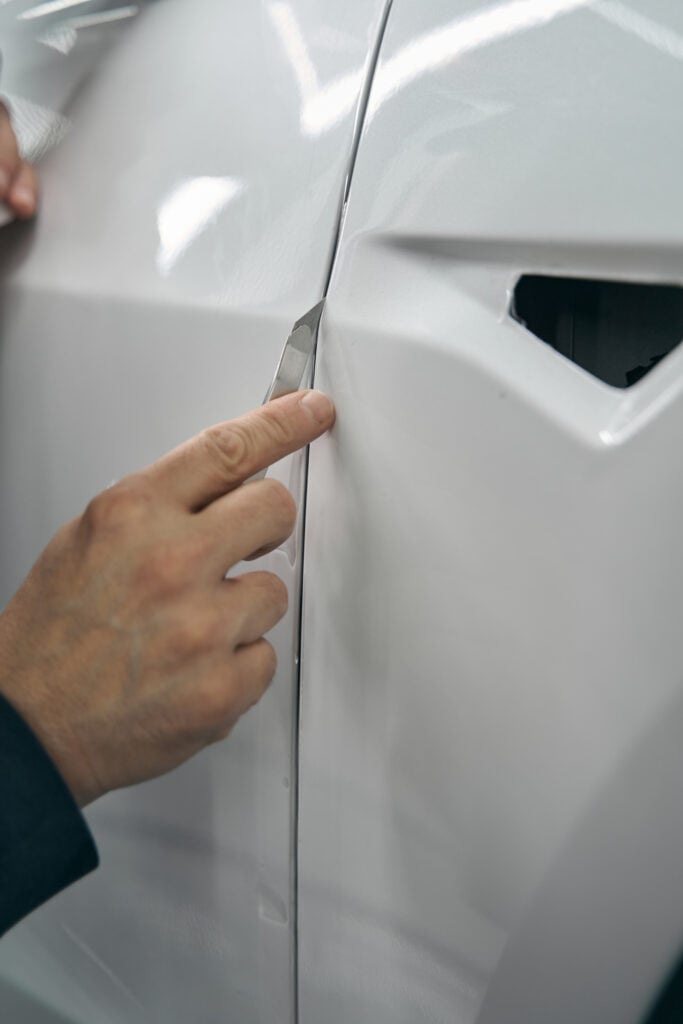
The first challenge in any paintless dent repair job isn’t fixing the dent itself—it’s reaching it. Most dents form on exterior panels like doors, fenders, hoods, and quarter panels, and the metal backing that needs to be accessed often sits behind layers of interior trim, insulation, or structural bracing.
Technicians rely on trim removal tools, typically made of nylon or plastic, to safely detach interior panels without scratching surfaces or breaking clips. Once the interior barriers are cleared, technicians can see and reach the underside of the dent. In some cases, drilling small access holes becomes necessary, particularly on tightly enclosed sections of a panel. These holes are strategically placed and later sealed, allowing rods and picks to reach areas that would otherwise be impossible to access.
The Core Toolkit: Rods and Picks
Once access is established, the real work begins with an array of metal rods designed for pushing dents out from the inside. These rods come in dozens of shapes, lengths, and tip styles, each suited to a particular type of damage or panel curvature.
- Whale tail rods feature a flat, wide tip ideal for applying broad, even pressure across larger dents.
- Hail rods are thinner and more flexible, designed specifically for the small, scattered dents caused by hailstorms.
- Knockdown rods help technicians push down high spots that form after initial pressure has been applied, refining the repair to a smooth finish.
Handles on these tools are often interchangeable, letting technicians swap tips depending on the dent’s location and severity. The right rod choice depends on factors like metal thickness, panel shape, and how deep the dent has been pushed.
Precision Tools for the Final Touches
Pushing a dent out rarely results in a perfectly smooth surface on the first attempt. This is where finer tools come into play. Tap-down pens and hammers, paired with glue-on tabs, allow technicians to gently correct minor high spots or low spots that remain after the initial push. These tools require a delicate touch, since too much pressure can create new imperfections.
Glue pulling kits have also become a staple, especially for dents on panels where rod access is limited. A technician attaches a specially designed tab to the dent’s surface using hot glue, then uses a slide hammer or pulling bridge to draw the metal back into place. This method works particularly well on creases or dents near panel edges.
Lighting: The Unsung Hero
While rods and picks get most of the attention, lighting boards are arguably just as critical to a successful repair. Paintless dent repair depends on the technician’s ability to see subtle variations in the panel’s surface, and ordinary shop lighting simply doesn’t reveal these details. Specialized LED lighting boards cast reflective lines across the metal, allowing technicians to spot the exact contours of a dent and track their progress as they work.
Without this reflected light pattern, it would be nearly impossible to know whether a dent has been fully corrected or if subtle imperfections remain. Many technicians consider their lighting setup just as important as their physical tools.
Measuring and Assessing Damage
Before any tool touches a dent, technicians often use measuring devices and damage assessment tools to evaluate the extent of the problem. This might include feeling for depth and edges by hand or using specialized gauges to determine how the metal has stretched or shifted. This assessment phase informs which rods, tips, and techniques will be most effective, ensuring the repair strategy matches the specific characteristics of the damage.
The Skill Behind the Tools
While the tools themselves are impressive, it’s ultimately the technician’s skill and experience that determine the quality of the repair. Choosing the right rod, applying the correct amount of pressure, and knowing when to switch techniques all come from hours of hands-on practice. The tools make paintless dent repair possible, but the trained hands guiding them make it effective.
From trim removal tools to specialized lighting boards, every instrument in a technician’s kit serves a distinct purpose in restoring a vehicle’s surface without compromising its factory finish. The next time you see a car free of dents after a hailstorm or minor parking lot mishap, it’s worth remembering the intricate toolkit that made that transformation possible.