
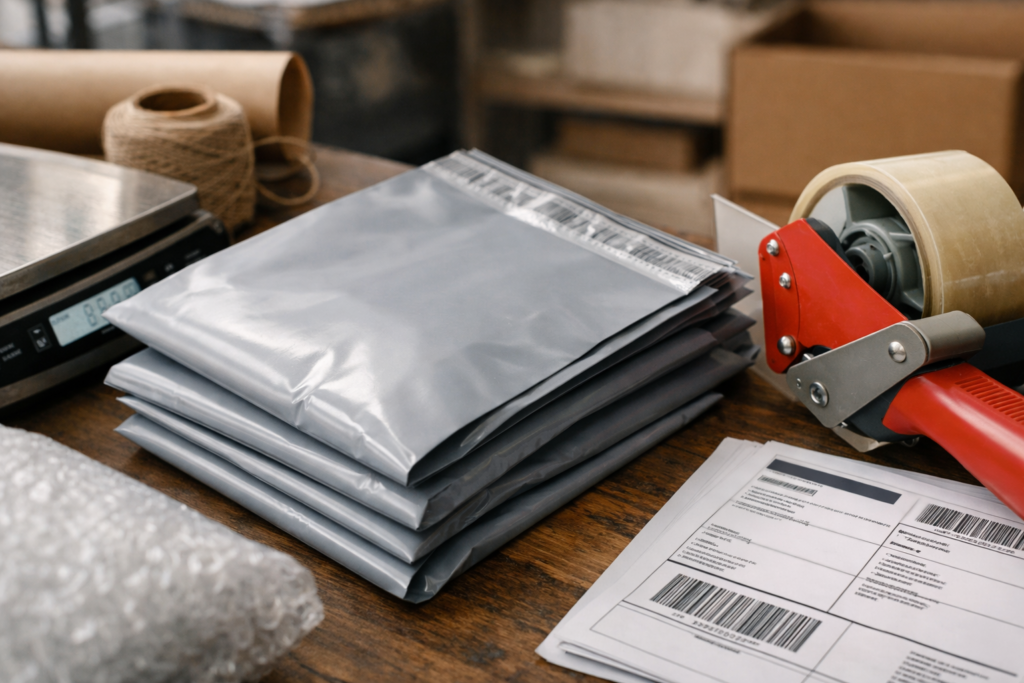
7 Ways Poly Bags Help Sellers Cut Postage in 2026
Key Takeaways
- Replace boxes with poly bags for apparel, soft goods, and other non-fragile items to cut billable weight fast. The biggest savings usually come from shipments that were paying to move corrugated, void fill, and empty space.
- Right-size poly bags by product dimensions and mil thickness instead of buying one “safe” size for everything. Extra room inside a plastic mailer often turns into higher postage, more material use, and a sloppier pack-out.
- Match the bag to the product before chasing the lowest unit price—clear poly bags, zipper bags, anti static bags, and heavy duty mailers each solve a different shipping problem. Using the wrong poly option can erase postage savings through damage, returns, or repacking labor.
- Compare poly bags on total cost per shipment, not just price per case across Amazon, Walmart, Target, or specialty packaging suppliers. A slightly better-grade bag can lower splits, speed up pack stations, and reduce return-related handling costs.
- Use resealable or zipper poly bags where returns are common, especially in apparel and accessories. That small packaging change can cut reverse-logistics friction and keep returned items cleaner and easier to restock.
- Verify “biodegradable,” “green,” and food grade claims before switching materials. For shipping teams, the practical win comes from poly bags that reduce postage without creating compliance issues, customer confusion, or disposal problems.
Postage didn’t just creep up again—it stacked another tax on wasted space. For growing DTC teams shipping hundreds or thousands of orders a week, that shows up fast in margin erosion, pick-pack slowdowns, and customer complaints about oversized packaging. That’s why poly bags are back under the microscope in 2026—not as a cheap substitute for boxes, — as a sharper tool for the right SKUs, the right workflows, and the right return policies.
In practice, the savings rarely come from one dramatic switch.
They come from dozens of small calls made correctly—moving soft goods out of corrugated, trimming dead air out of parcel dimensions, and choosing the right plastic bag grade instead of buying whatever looks cheapest on Amazon or Walmart. The honest answer is that poly can lower billable weight, speed up pack-out, and free up shelf space. But only if operations teams stop treating all bags as interchangeable. A clear flat bag, a resealable zipper bag, an anti static bag, and a heavy duty shipping mailer solve very different problems. Miss that, and the postage win disappears in returns, damages, and repacks.
Why poly bags matter more in 2026 as postage and packaging costs keep rising
How carrier pricing keeps punishing oversized cartons and wasted cube
Why direct-to-consumer operations managers are rechecking every bag, box, and mailer line item
Postage inflation is turning packaging choices into margin decisions.
- Oversized cartons cost more than they used to. Carriers keep charging for wasted cube, so switching some apparel, soft goods, and accessories into poly bags can cut billed weight fast—sometimes by 20% to 40% on lightweight orders.
- Mailers take up less space. That matters twice: less storage in the pack station, and less air shipped out the door. For standard folds, clear poly bags also help teams confirm contents without reopening sealed packs.
- Bag style now matters line by line. Flat poly bags work for shirts, manuals, and small parts; gusseted poly bags fit bulkier items like bread packs, quart-size kits, or extra layers; heavy duty poly bags make more sense for sharp edges, returns, and rougher storage conditions.
- Procurement teams are rechecking every SKU. In practice, one inch of excess package size repeated across 5,000 monthly shipments isn’t small—it becomes a real shipping — packaging bill problem.Worth pausing on that for a second.
1) Poly bags cut billable weight by replacing boxes for the right products
An apparel brand shipping 300 orders a week swapped 10x8x4 cartons for poly mailers on tees — leggings. Postage dropped by about $0.62 per parcel, and the pack station moved faster because there was less void fill, less tape, less dead air.
That’s the basic math: poly bags reduce billable weight and dimensional charges when the product is soft, flexible, and not crush-prone. clear poly bags work for inventory control and inner protection, while flat poly bags make sense for folded apparel, socks, and other non-fragile goods. For bulkier soft items, gusseted poly bags can handle extra volume without forcing a jump to a box.
When clear poly bags, poly mailers, and zipper bags beat corrugated on parcel cost
- Best fits: apparel, linens, plush, nylon accessories, and soft goods
- Useful formats: resealable zipper bags as inner packs, poly mailers as the outer shipper
- Added upside: waterproof plastic protection in transit
Which products should never move from boxes to poly bags despite the savings
Some items shouldn’t make that switch—glass, rigid electronics, cosmetics in breakable containers, or anything with sharp corners. Those need structure. In those cases, heavy duty poly bags may help as dust or moisture barriers, but not as the only shipping pack.
2) Right-size poly bags reduce dimensional charges sellers still miss
Postage leaks through inches.
Sellers still focus on item weight, then wonder why a soft order costs too much to ship. The answer is usually sizing: poly bags that are too large, too thick, or padded with needless extra room create avoidable cost — messy packouts.
How to choose size, mil thickness, and extra room without paying to ship air
For apparel, a bag should fit the folded product with about 0.5 to 1 inch of extra space on each side—not 3 inches. Flat poly bags work for slim, uniform items, while gusseted poly bags make sense for bulkier packs that need depth without jumping to a much larger size.
The most common sizing mistakes with small, large, and heavy duty poly bags
Three mistakes show up constantly:
- Using heavy duty poly bags for lightweight shirts that only need 2 to 2.5 mil
- Choosing large bags for small SKUs, which means shipping air
- Buying one “standard” size for every order
Clear poly bags can also help pick accuracy in multi-item storage, which cuts repacking time.
Where resealable and zipper poly bags help lower returns handling costs
For returns, resealable or zipper options reduce tape use and speed inspection. In practice, that matters most for soft goods, kits, and accessories—especially where extra labor on returns quietly eats margin.
The data backs this up, again and again.
3) Poly bags improve pack-out speed, labor efficiency, and storage density
Think of this like a warehouse coffee chat: the fastest pack-out line usually isn’t the one with more people, it’s the one handling less bulk. Poly bags arrive flat, stack tight, and let teams keep hundreds at one station where the same footprint might hold only a few cartons or plastic totes. That matters when pick-pack benches are crowded — and in practice, it cuts walking, folding, and box-building time.
Why flat-packed plastic bags free up more warehouse space than cartons and totes
Flat poly bags and clear poly bags store in slim sleeves, which makes slotting easier for apparel, soft goods, bread bags, and small storage items. Gusseted poly bags help with extra width for bulky but light products, while heavy duty poly bags hold up better for sharp corners or heavier kits.
How shipping teams use custom and stock poly bags to simplify pick-pack stations
Most teams keep it simple:
- Stock sizes for top 20 SKUs
- Custom poly bags for repeat items with stable size profiles
- Resealable or zipper options for returns and kitting
Less dunnage. Fewer box sizes. Faster hands.
Most people skip this part. They shouldn’t.
4) Not all poly bags are equal: matching bag type to product prevents expensive damage
One returns review found packaging failure drove nearly 11% of avoidable replacement costs—and the culprit often wasn’t the product, but the wrong bag. That’s the expensive part: sellers switch to poly bags to cut postage, then lose the savings on crushed corners, moisture exposure, or compliance misses.
Clear flat poly bags for apparel, prints, and dust protection
Clear poly bags work well for folded apparel, inserts, and art prints that need visibility and light dust protection. Flat poly bags are best when the item already has structure; they don’t add cushion, they just keep goods clean and organized.
Anti static poly bags for electronics and parts handling
For cables, components, and repair kits, anti static bags matter—regular plastic can create avoidable risk during handling. In practice, that small material upgrade costs less than one damaged accessory order.
Food grade, bread, quart, and mini poly bags: where compliance matters and where it doesn’t
Food grade bags are for direct food contact like bread, quart-size portions, or mini sample packs. A shipping bag isn’t automatically food safe (that detail gets missed a lot).
Real results depend on getting this right.
Heavy duty, biodegradable, reusable, and green claims buyers should verify before switching
Heavy duty poly bags fit dense goods, while gusseted poly bags handle bulkier items with extra depth. And biodegradable, reusable, or green claims should be verified—film thickness, resin type, and disposal rules change what those labels actually mean.
5) Buying poly bags for shipping: what transactional shoppers need before placing an order
How does a seller know which poly bags are actually worth buying? The honest answer is that price per pack tells almost nothing; cost per shipped order, damage rate, and fit matter more.
How to compare poly bags across Amazon, Walmart, Target, and packaging suppliers without chasing the wrong metric
Listings on Amazon, Walmart, and Target often push count first, but sellers should compare three things instead: mil thickness, usable size, and seal quality. A 14.5 x 19 bag that’s 2.5 mil can outperform cheaper flat poly bags or clear poly bags that split at the seam—especially for apparel shipping.
What to look for in custom poly bags for branding, returns, and packaging consistency
For custom runs, sellers should check:
- consistent size tolerances
- strong adhesive or resealable zipper options
- print quality on white or clear plastic
- return-friendly formats for repeat use
Gusseted poly bags work better for bulky soft goods, while anti static options fit electronics and parts.
No shortcuts here — this step actually counts.
Cost-per-use math: when cheap plastic bags cost more than better-grade poly options
A bag that costs 4 cents less but causes 2 extra failures per 500 orders isn’t cheaper. In practice, better-grade heavy duty poly bags usually cut replacement shipments, packing time, and waste. That’s the metric that counts.
The 7 practical ways poly bags help sellers cut postage without creating returns, waste, or customer complaints
Postage gets expensive fast.
- Lower package weight: poly bags often cut 1 to 4 ounces versus small boxes, which matters on every zone-based shipment.
- Less dimensional weight: for apparel, soft goods, and totes, a bag collapses around the item instead of charging for air.
- Fewer materials:Using clear poly bags for inner protection can replace extra paper or nylon sleeves on items that don’t need a carton.
- Faster packout: flat poly bags work well for folded shirts, bread bags for textiles, and mini accessories.
- Better fit: gusseted poly bags handle bulkier packs without jumping to an extra large box.
- Targeted protection: heavy duty poly bags reduce tears on returns and outbound shipping—without forcing a heavy duty corrugated option.
- Cleaner storage: sellers can keep more bag size options on one shelf, instead of pushing cartons away into overflow space.
A quick decision framework for choosing between poly bags, bubble mailers, and boxes in daily operations
Use poly bags for non-fragile items, bubble mailers for light products needing cushion, and boxes for anything rigid, sharp, food grade, anti static, or breakable.
The one policy shift packaging teams should make now before peak-season rates hit
Set a pack-out rule now: if an item survives a 3-foot drop test in a resealable mailer, it shouldn’t ship in a box (that’s where most avoidable cost hides).
Frequently Asked Questions
What is a poly bag?
A poly bag is a plastic bag made from polyethylene, used for packaging, shipping, storage, — product protection. It can be clear or opaque, flat or gusseted, open-top, zipper, resealable, anti static, food grade, or heavy duty depending on the job.
Does the USPS have poly bags?
USPS doesn’t sell standard retail poly bags as a broad packaging category the way packaging suppliers do. What shippers usually mean is poly mailers that work with USPS services, — yes, those are widely used for clothing, soft goods, and other non-fragile items because they’re light, waterproof, and cheaper to ship than a box.
What can be used instead of poly bags?
If plastic isn’t the right fit, the best substitute depends on what is being packed. Paper mailers, corrugated mailers, kraft bags, reusable totes, nylon pouches, and biodegradable packaging can all replace poly bags in certain cases—but they don’t all match the same moisture resistance, puncture strength, or low shipping cost.
Are poly bags waterproof?
Most poly bags are water-resistant, — many are effectively waterproof for normal shipping conditions. But here’s what most people miss: the bag material may block water while the seal or zipper is still the weak point—especially on cheap resealable bags.
Are poly bags recyclable?
Some poly bags are recyclable, but not always through curbside pickup. Clear polyethylene bags, grocery-style plastic bags, and shipping poly mailers often need store drop-off or specialty film recycling, so teams should check local rules before telling customers to toss them in the bin.
What’s the difference between poly bags and poly mailers?
A standard poly bag is usually an inner packaging or storage bag. A poly mailer is built for parcel shipping, with a self-sealing strip, heavier film, and enough tear resistance to move through carrier networks without splitting open.
Let that sink in for a moment.
When should a brand use clear poly bags instead of boxes?
Use clear poly bags when the item doesn’t need crush protection and benefits from dust, moisture, or tamper protection—apparel, linens, printed materials, and small accessories are common examples. For direct-to-consumer shipping, though, a thin inner bag often works best inside a mailer or carton rather than by itself.
Are food grade poly bags safe for bread, produce, or other food items?
Only if they’re labeled food grade. That’s non-negotiable. Food packaging needs the right resin and compliance for direct contact, whether the bag is being used for bread proofing, bakery items, produce, frozen goods, quart-size portions, or bulk storage.
How do you choose the right size and thickness for poly bags?
Start with the product’s actual dimensions, then add enough room for easy packing without leaving excessive empty plastic. For light apparel or paper goods, thinner bags may be fine; for hardware, bundled items, or sharp edges, heavier duty poly bags in the 2 mil to 4 mil range usually hold up better.
Can poly bags protect electronics from static?
Regular poly bags can’t. Electronics, circuit boards, and sensitive components need anti static bags designed to reduce electrostatic discharge, and that distinction matters more than people think (one wrong bag can turn a routine shipment into a return).
The short version: it matters a lot.
Postage pressure isn’t easing in 2026, and that’s exactly why packaging decisions that once felt minor now sit on the profit-and-loss statement in plain view. The teams gaining ground aren’t just buying cheaper supplies. They’re matching package format to product, trimming billable weight where a box adds no value, and fixing sizing habits that quietly trigger dimensional charges order after order. Small changes, real money.
That’s the practical case for poly bags. Used on the right SKUs, they cut parcel weight, free up storage space, — move faster through the packing line—while still protecting soft goods, apparel, and other non-fragile items well enough to avoid preventable returns. But the savings only hold if bag type, thickness, and fit are chosen with discipline (that part gets missed a lot). A bargain mailer that splits, scuffs, or creates a messy returns process isn’t a win.
The next move should be concrete: pull the top 25 SKUs by shipping volume, compare current package weight and cube against a right-sized poly option, and test the switch for two weeks before peak-rate increases hit. That review will show—fast—where cost is being shipped out the door.
For more great reading, visit our site and explore related topics.