
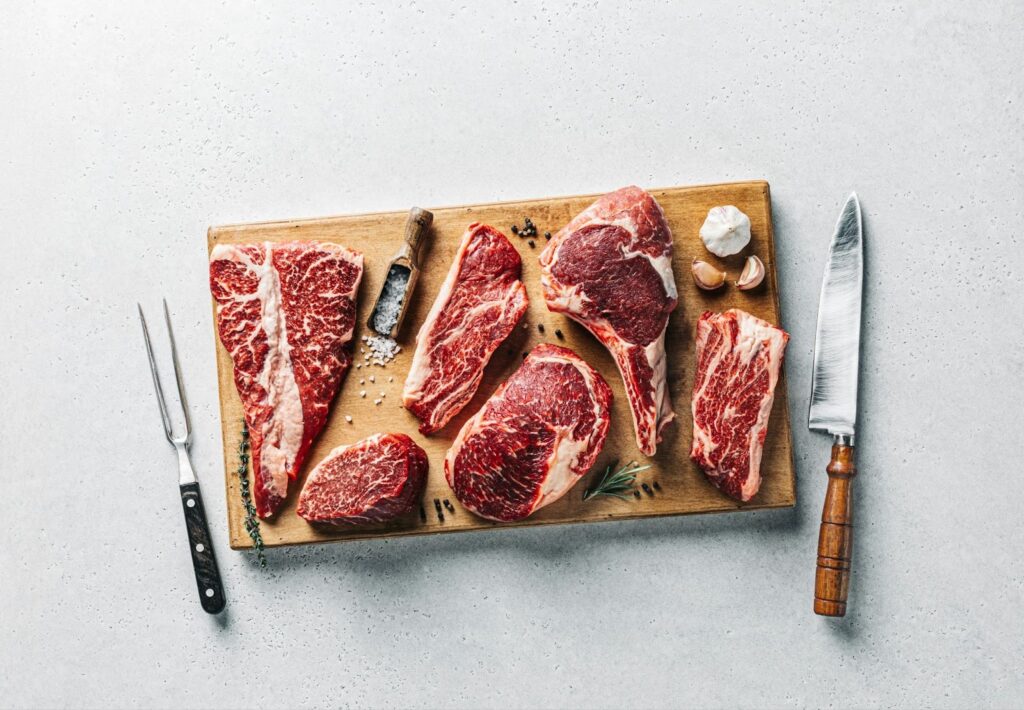
As American Herd Shrinks, Lack of Beef Continues to Add Pressure
Beef production has long been a staple across the U.S. population. Since the very beginning, it has been woven into everyday lives not just as a source of food, but as a source of economic drive for entire industries.
As much of a demand that beef has become, new data around declining cattle herds places pressure on the nation’s total beef supply. According to the latest figures from the U.S. Department of Agriculture, the American cattle inventory has roughly fallen to 86 million head, the lowest level since 1951. While citizens continue to rely on beef, the cattle herd is now smaller than it ever was.
The numbers from the USDA paint a challenging picture. When there is not enough cattle, that means there is not enough beef to go around. At some point, retail prices are forced to spike while consumers must pivot their needs elsewhere.
Beef’s role in America stretches back centuries, and without it, people wouldn’t function like they do today. Its origins started with Spanish explorers who introduced the first Longhorn cattle to America, roughly back in 1534. When British colonists came to America, they brought Devon cattle, their source of leather, milk, labor, and meat around 1623.
Many years later, the Industrial Age changed how cattle were raised in the U.S., and during the early stages of beef production, cattle health became a major priority. From heavy antibiotic use to advances in bioengineering, this eventually led to increased beef output as cattle became well-nourished and treated. Fast forward many more years, this better care for cattle is what made the industry what it is today.
Even so, the U.S. is one of the world’s largest producers and exporters of beef, and the industry contributes billions of dollars annually to the economy and supports hundreds of thousands of jobs. But when cattle numbers fall, the many complications become incredibly complex.
Aside from beef prices rising, ranchers and farmers have to rethink their strategies from the ground up. It means there are less cows to make a profit, and therefore they must make tough decisions on how to keep pace. It also means they must better manage their farmlands through rotational grazing or water control to prevent long-term degradation.
In crises like this, this is where modern tools like water monitoring systems help rebuild in the best ways. Given drought is one of the main factors of declined herds, water management is intended to monitor tank levels and detect hidden risks early on.
As Andrew Coppin, CEO of Ranchbot explains, “Healthy cattle depend on consistent, clean water, as does every part of the operation that supports them. In today’s climate, safeguarding our herds means getting smarter about how we monitor, manage, and value every drop.”
Water monitoring technologies are also becoming increasingly essential for improving overall operational efficiency. They prevent overflow, determine water needs in real time, alert leaks right away, and pump water automatically. They allow farmers to see where the water is flowing exactly, serving as a critical source when cattle are scarce.
The broader concern here is that cattle numbers are diminishing at record speed, and without properly caring for pastures now, beef as we know it will continue to affect entire communities the most. Soon enough, prices will rise much higher, and people who depend on beef will no longer have the means to afford it.
Coppin adds, “Cattle are the cornerstone of rural livelihood and food security around the world. For generations, they’ve powered economies, nourished communities, and sustained ranching families through good years and hard ones.”
As history shows us all, beef is a constant in American life. It is prevalent in everyday routines, so the need to act now has never been more urgent. By adopting smarter water tools and becoming aware of farmlands, perhaps U.S. cattle can move in a different, more positive trajectory.