
Car-to-Car Communication: How V2V Tech Prevents Accidents
The automotive industry is experiencing one of its most transformative eras, where safety, connectivity, and automation converge. Among the cutting-edge innovations shaping the road ahead is Vehicle-to-Vehicle (V2V) communication. This technology enables cars to “talk” to one another by exchanging real-time data such as speed, location, and direction. The ultimate goal? To prevent accidents, improve traffic flow, and save lives.
What is V2V Communication?
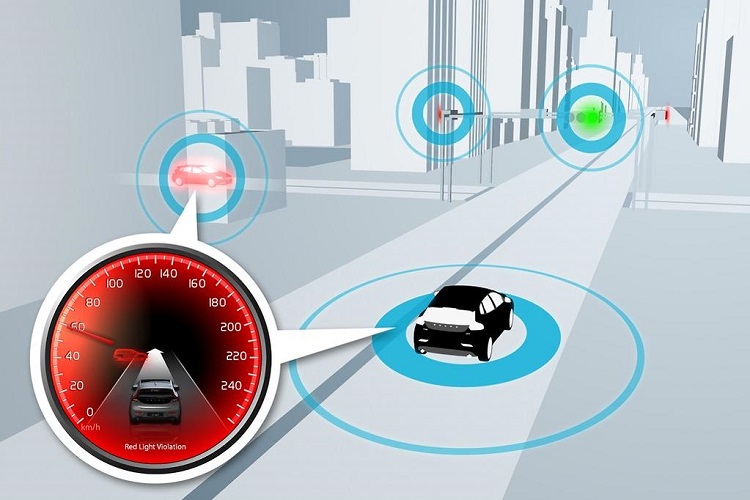
V2V communication uses short-range wireless signals to share information between vehicles within a specific radius. Imagine two cars approaching a blind intersection: even if the drivers cannot see each other, their vehicles can exchange data and alert them of a potential collision.
This system isn’t about taking over the driver’s role (at least not yet). Instead, it’s designed to complement human awareness with instant digital updates. With road accidents claiming over a million lives annually worldwide, such proactive systems have the potential to change driving forever.
How V2V Tech Works
V2V communication relies on Dedicated Short-Range Communication (DSRC) or newer cellular-based technologies like C-V2X (Cellular Vehicle-to-Everything). Vehicles equipped with V2V tech send signals up to ten times per second, transmitting:
- Current speed
- Direction and braking status
- GPS location
- Stability control activation (e.g., skidding or hard braking)
When nearby vehicles receive this information, their systems analyze potential threats and alert drivers. In advanced setups, the car can even take corrective action automatically, such as braking or steering adjustments.
Preventing Accidents with V2V
The strength of V2V lies in its ability to detect threats that are invisible to human drivers. Here’s how it prevents accidents:
- Blind Spot Detection
Vehicles can warn each other if one car is lingering in another’s blind spot, reducing side-swipe collisions. - Intersection Safety
At crossroads, cars can signal their intended path, preventing crashes caused by misjudged turns. - Rear-End Collision Avoidance
If the vehicle ahead brakes suddenly, V2V sends an instant alert to following cars—faster than human reaction times. - Highway Merging Assistance
When entering highways, V2V systems can coordinate lane changes, allowing smoother traffic flow and reducing risky merges. - Weather Hazard Alerts
If a vehicle detects icy roads, heavy fog, or hydroplaning, it can notify surrounding cars in real time, keeping drivers prepared.
Beyond Safety: Other Benefits of V2V
While accident prevention is the primary focus, V2V communication brings additional benefits:
- Reduced Traffic Congestion: Vehicles can coordinate movement, creating smoother traffic flow.
- Fuel Efficiency: By avoiding sudden braking and idling, cars save fuel and reduce emissions.
- Emergency Vehicle Priority: Ambulances and fire trucks can broadcast signals to nearby vehicles, clearing the road faster.
- Foundation for Autonomous Driving: V2V is a stepping stone toward fully autonomous ecosystems, where cars and infrastructure work in harmony.
Challenges Holding Back V2V Adoption
Despite its promise, V2V technology faces barriers:
- Infrastructure Readiness: Not all regions have the required communication networks.
- Standardization Issues: Different automakers may adopt varying protocols, leading to compatibility problems.
- Cybersecurity Risks: Connected vehicles are potential targets for hackers. Strong encryption and defenses are essential.
- Cost and Consumer Adoption: Adding V2V systems increases vehicle prices, and widespread adoption requires most vehicles on the road to be equipped.
Governments and Automakers Driving V2V Forward
Global efforts are underway to make V2V mainstream. The U.S. Department of Transportation has actively promoted DSRC, while Europe and China are leaning toward 5G-enabled C-V2X. Major automakers like Ford, Toyota, and Volkswagen are investing heavily in these systems.
Industry analysts believe that by the early 2030s, most new cars will come with built-in V2V technology. Once critical mass is reached, the safety benefits will multiply exponentially.
Real-World Applications Emerging
Pilot projects worldwide are already testing the effectiveness of V2V communication. In Michigan, connected corridors are being developed where cars, traffic signals, and road sensors share data. Similarly, cities in Europe and Asia are experimenting with smart intersections that integrate V2V and V2I (Vehicle-to-Infrastructure) systems.
These trials show that when vehicles can “see” beyond the driver’s line of sight, accident rates drop dramatically. In fact, some estimates suggest that V2V technology could reduce up to 80% of traffic collisions involving unimpaired drivers.
The Bigger Picture: A Safer, Smarter Future
V2V communication isn’t just about vehicles; it’s about building a connected ecosystem where cars, roads, and cities interact seamlessly. When combined with other innovations like autonomous driving, artificial intelligence, and electric mobility, V2V has the power to redefine road safety.
Resources such as evblogs.in often highlight how these interconnected technologies are shaping modern transportation, proving that the future of driving lies in both collaboration and connectivity.
Final Thoughts
As cars evolve from isolated machines into intelligent, connected systems, V2V communication represents a monumental leap forward. By enabling cars to share data in real time, this technology can prevent countless accidents, save lives, and create safer roads for everyone.
While challenges remain in terms of cost, cybersecurity, and infrastructure, the momentum is undeniable. As governments, automakers, and tech companies push for adoption, we edge closer to a future where accidents are no longer inevitable, but preventable.
V2V communication may not eliminate all risks on the road, but it brings us one step closer to the vision of truly safe, intelligent, and cooperative mobility.